
Roosevelt County Most Wanted
The Roosevelt County Sheriff's Most Wanted publication is the verified local source. It lists people with active felony warrants, per the county. Tips may go to the sheriff, Portales Police, or Crime Stoppers. The posting also warns the public plainly: never try to apprehend anyone. A wanted image appears on the county's own page, which is where it stays rather than being copied here.
Know the limits. The list is selective, not a full warrant database. The county page gives no headcount, no reward amount, no tip line, no update schedule, and no anonymity procedure. Resist guessing at those details from how other counties run things. A listing can also lag behind reality, since an arrest does not always update the page right away. Check the official presentation on the Most Wanted page before trusting any name, photo, or warning from elsewhere.
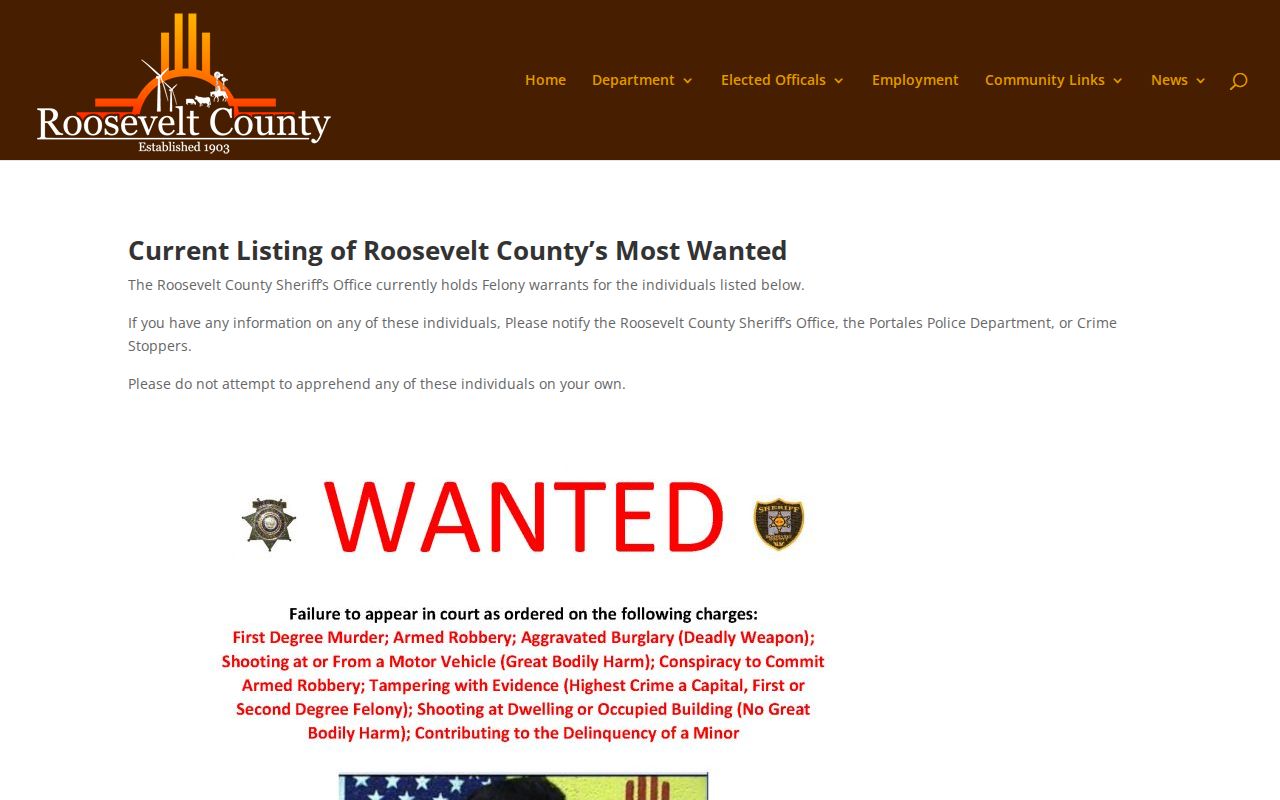
The official county page is where Roosevelt County posts its felony-warrant material. Treat it as a pointer, not a copy. Nothing here reproduces the live photo list, so revisit the county source for the current view.
Roosevelt County Warrant Fields
A wanted post can help you recognize a person and grasp why the notice exists. That is about all it does. The county page confirms a wanted graphic and ties the listed people to felony warrants, but it promises no set of standard fields. Some entries may show more detail than others. The table below splits what the county publication itself establishes from details that need confirmation through the responsible office or court.
| Field | What it can show |
|---|---|
| Name or identifying label | Identifies the person the felony-warrant notice concerns; confirm similar names with an official office. |
| Wanted image | A county-posted recognition aid, when displayed. It remains an official-page item, not proof of identity or guilt. |
| Warrant basis | The county says its listing concerns felony warrants. The public page is not a complete docket or a live status service. |
| Agency direction | The page routes information to the sheriff, Portales Police, or Crime Stoppers, while expressly warning against personal apprehension. |
| Case history | Not supplied as a complete listing field. Court proceedings and later outcomes belong in the court record. |
A warrant is a court-authorized order tied to a criminal matter. Status can shift quickly. It may be served, recalled, or quashed. So read any public notice as a reason to verify, never as the final word on a person or a case.
Using Roosevelt County Listings
Think of the public listing as a tool for recognition and safe reporting. Independent action is not its purpose. The steps below keep the county's own safety direction intact while separating three distinct things: a wanted notice, a current custody check, and a court case.
- Open the official Sheriff’s Most Wanted publication and read the notice as it currently appears.
- Compare only the information the county has posted. Do not assume that a similar name, an old image, or a search result identifies the same person.
- If information may help law enforcement, contact the Roosevelt County Sheriff’s Office, Portales Police, or the official emergency channel when circumstances require it. Do not make contact with the person.
- For a subsequent custody or booking question, use the county-wide Roosevelt County booking and custody record path rather than treating the wanted list as a jail roster.
Crime Stoppers is named by the county as one route for information. What the page lacks is a Roosevelt-specific number, a stated reward, or an anonymity pledge. Borrowing a tip line or reward from another community would be a mistake. For direct contact, the Sheriff's Office main line is 575-356-4408. Sheriff dispatch and non-emergency calls go to 575-356-4404.
Roosevelt County Sheriff’s Office
1700 N. Boston
Portales, NM 88130
Main: 575-356-4408
Dispatch/non-emergency: 575-356-4404
Immediate threat: 911
Note: A felony-warrant listing is a law-enforcement notice that does not establish a person's present location or any court outcome.
Check a Roosevelt County Warrant
Roosevelt County offers no public sheriff warrant-search portal. The most wanted page is a publication list, plain and simple. It cannot run a name search across every active warrant. For a specific person, start with current-custody and dispatch contacts, then turn to the court that may hold the related matter. No single website will hand you a guaranteed answer. This route at least puts your question in front of the offices able to confirm an official record.
- For a recent arrest, possible hold, or current custody question, call Roosevelt County Detention Center at 575-356-6871 and ask which office can verify the matter.
- For a sheriff or dispatch verification path, use the county’s listed sheriff non-emergency number, 575-356-4404. Provide identifying details carefully and follow staff directions.
- If the issue is tied to a court case, contact Roosevelt County Magistrate Court at 575-356-8569 for misdemeanor or traffic matters, or District Court at 575-359-6920 for felony matters.
- Use New Mexico Case Lookup to locate a current electronic case and docket events, then verify any warrant status with the court or clerk. A case search is not a live statewide warrant database.
After a case is filed, the New Mexico Case Lookup can help with a name or case number. Access has limits, though. Juvenile matters, some municipal data, and records from before 1997 fall outside the ordinary public view. Anyone who thinks a notice is wrong, or who needs to deal with a warrant, should contact an attorney or the court rather than working through a public listing.
Court locations and jurisdiction questions can be answered through the New Mexico court directory. Roosevelt County Magistrate Court takes criminal misdemeanors and traffic citations. Felony matters go to Roosevelt County District Court, part of the Ninth Judicial District. Start any court search with the official New Mexico Case Lookup page.
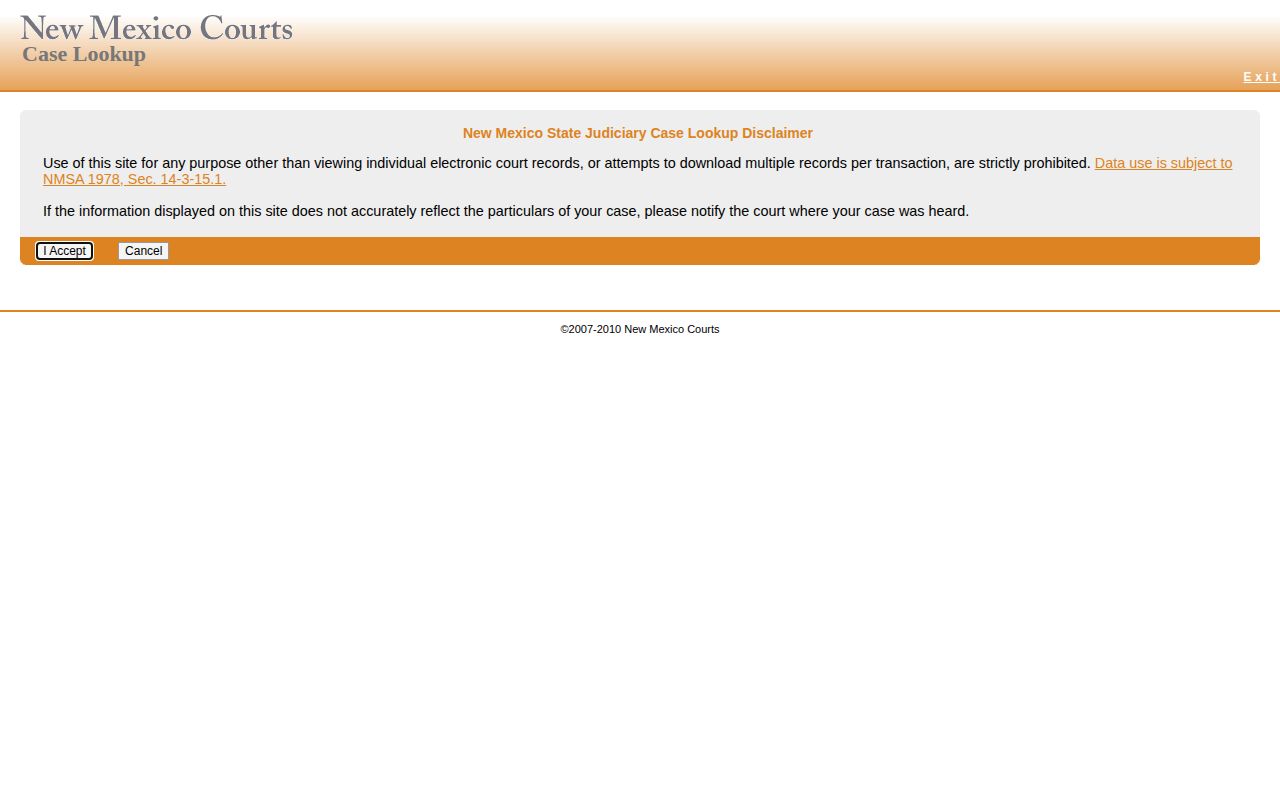
A court-search view helps after a booking or warrant concern. But it can't replace official word. A clerk, dispatcher, or detention officer must confirm an active warrant.
Roosevelt County Warrant Types
Similar words, different doors. The Roosevelt County Sheriff's Most Wanted list does one thing only. It names people with felony warrants. It does not sort them by type, and it offers no live status check on any single warrant. Treat the listed type as a pointer. The right move is to call the verifying office that handles it.
| Warrant type | Plain-language meaning and verification path |
|---|---|
| Felony warrant | A warrant connected to an alleged felony. Roosevelt County’s official wanted publication is expressly a felony-warrant list; verify status with dispatch, detention, or District Court as appropriate. |
| Bench warrant | A court-issued warrant that can follow a missed court obligation or another court matter. Ask the court that has the case rather than assuming it appears on the public wanted list. |
| Misdemeanor or traffic matter | A court-connected matter that may be within Magistrate Court’s criminal misdemeanor or traffic jurisdiction. Contact the clerk for the relevant case. |
| Hold or custody question | A status question that may concern a person already booked or transferred. RCDC can confirm present county custody, while a court can address the case record. |
New Mexico makes public-court material and adult arrest records available within legal limits. What a warrant notice tells you is that a judge signed off on a charge. The final word belongs to the court record, which shows how a case actually resolved.
RCDC books people for agencies and courts with jurisdiction in the county. That role has limits. The jail can confirm who is in county custody right now and point you to the right custodian, but it is not the start and end of every warrant question. Sheriff dispatch helps route local verification calls. For anything tied to a court case, go to the court itself, or use Case Lookup for its limited public view of filed electronic activity. Custody status, a warrant notice, and a final case outcome are three different things. Keeping them straight saves a lot of confusion.
VINE and the Historical App
The county's detention navigation links to VINE, a custody-notification service used by participating jurisdictions. VINE sends alerts about custody changes, release, or transfer where it participates and has current data. It will not show booking photos, though. For a same-day custody confirmation, the RCDC phone line still wins.
An older digital tool also floats around local history. A 2015 Eastern New Mexico News report covered a multi-agency app tied to Portales Police, the Sheriff's Office, and ENMU Police, offering tips, photos, and news. The county's current navigation does not link it, so there is no sign it still runs. Do not lean on it for warrants, custody, or booking photos today.
Why does the difference matter? Because an old app reference should never crowd out the current official paths: the wanted publication for safety information, RCDC or dispatch for local checks, the court for case status, and VINE strictly for custody alerts.
One more boundary. A VINE alert says nothing about the Most Wanted list, and a wanted notice does not enroll anyone in VINE. Different tools, different jobs. Present county custody goes to RCDC. A court-connected warrant goes to the court or clerk, after a look at the available case information.